
FICA TIP Credit Agent Orientation
Live Webinar with Vanessa Roberts
(Raw transcription; not proofed for grammar or spelling.)
Click here for Google Doc of the transcript.
[0:01] Everybody, happy Monday. Hope you had a terrific weekend. I would like to start off by saying, can you hear me? If you've been tuning in, I have been struggling with my audio, and awesome — it says loud and clear. And I got to tell you, like all last week, it was an epic side quest for me to figure out what the heck. I thought it was my headphones, I thought it was my mic, then it turned out to be a Bluetooth driver. And fixing this has made me feel like, hands down, the most smart, capable human. I'm so proud of myself. And really, what it came down to was a complex series of turning it off and turning it back on again. And we got there. But I am pleased as punch that I am not double-handing it with a microphone headset and a phone headset for audio and that you guys can hear me great.
[1:01] So it's gonna be a great week. Coming through crystal clear, letting everybody log in. You can see my screen. And if you saw my Facebook posts, you'll know Brian has allowed me to share and discuss with y'all some of the FinTitan agent confidential information regarding what is being shared by the FinTitan agents.
[1:35] And remind everyone that if you haven't already signed your NDA and your agent agreement, there is still time, there's not a deadline, and there is absolutely no cost to participate in what we're going to be talking about today. This is an exclusive add-on or an exclusive benefit for the Small Batch System members. So as a Small Batch System member, this is a revenue generator. You're familiar with poking around the members area. We do offer ways for you to use your Small Batch System to make money or generate revenue, hence the name, right? So some of them are free programs that you can market as an affiliate and earn a commission. Some of them are paid programs that are tools or software or courses to augment your Small Batch System course. And then there's opportunities like this to partner with Brian on some of his other endeavors, much like the ERTC, where you are paid to generate leads for this company.
 Introduction to the FICA TIP Credit and FinTitan Agent Program
[2:44] Vanessa: So what we're going to talk about today is — for everyone that is participating with the FinTitan agent program — the first of hopefully very many tax programs that FinTitan agents are able to share with local businesses is the FICA TIP credit. And that's what we're going to talk about today. So we're not going to be talking about the agent program itself, not about the commission structure or the marketing structure or the company structure. I'm going to be teaching you about the FICA TIP credit, the industries that it benefits the most directly, impacts the most heavily. So you can get a feel for it and decide if you haven't yet signed your agent agreement — if you haven't decided yet if you want to participate, there is still time, you can still — if you were just needing a little more information, that's what we're gonna go over today. We are also gonna talk about how easy, like blue ocean, the target niche is, and how we can reach them, all right? Don't wanna spoil too much, but we're gonna dig in.
[4:00] So as we go through the training, as always, I am watching the chat and Q&A. I believe I'm the only person here today. Let me see if Nikki popped on. Nope, it's just me. So I'm going to be balancing questions and presentations. So as we go, ask any questions and I will answer them as best as possible. And if it is completely off topic, I'll just save it till the end, okay? Here we go.
What Is the FICA TIP Credit?
[4:29] Vanessa: So what is the FICA TIP credit? What we're going to talk about is understanding what it is and work on how to effectively communicate this, the value of it to restaurant and bar owners, because restaurant and bar owners have the most money sitting there waiting to simply be reclaimed. There are other industries, but we're going to talk about restaurants and bars today.
[4:57] So why does this matter? Okay, let me jump in and tell Mike — okay, so you signed the NDA but didn't recall receiving the agent agreement, Mike. And let me just say this for everybody: if you are missing any part of the system — the NDA, the agent agreement, your FinTitan agent onboarding email, or the training call invitations that happen every single Wednesday — please send me a ticket at GetSupport.biz and I will help you one-on-one, get you whatever you need so that you have, you're all set up, fully functional, and are able to jump on the Wednesday call with me this week. Okay, so that's for everybody, not just Mike. But Mike, thank you for asking that question, I should have said it at the top of the hour. GetSupport.biz, please, please, please.
[5:51] Okay, so why does this matter? This is found money for business owners — a direct cash refund, not just a deduction. So this is actual cash that they have paid out because they paid taxes on this, the FICA tax. But they, due to a long-standing established law — this law was established over 30 years ago — it's not part of COVID, is not part of the Care Act. This money is owed back to them, no questions, and it's not a hypey, like highly contested tax credit. This is well established, no glitches, right? So very, very important. It's found money, direct cash refund, it will immediately go back in their pocket, being processed really quickly. And your role as an agent is to just simply identify an eligible business, spark their interest, and then there's a risk-free recovery process, right? There's a no-obligation, get-your-estimate, we'll do the work, etc., etc., etc.
[6:46] And so what is the FICA TIP credit? Okay, so it's a federal tax credit, information documented at the IRS Section 45B, which reimburses employees for social security and Medicare taxes paid on employee tips. Okay, so when you are at a restaurant and you add 20 bucks or 20% to a ticket — especially if you do it on a credit card, right? — the restaurant receives that money, the bar receives that money, calculates it as income for the server, and has to pay the Social Security and Medicare federal taxes on that income. They have to pay their side of it, just like on any other penny paid to an employee. And that's really important, because that was not money that ever belonged to the restaurant — that is a pass-through. So remember that, because that is what the credit adjusts for — is that this was not money that was ever owned by the restaurant, right?
[7:45] So it was established in 1993 under the Clinton administration to encourage accurate tip reporting, and the concept turns a mandatory tax expense into a refundable asset. They have to pay the taxes, or claim the credit. If they haven't claimed the credit, then they have paid the taxes. So they are owed a refund. So here's the problem: they are overpaying their payroll taxes. That's the Social Security and Medicare portion of the employer taxes that they have to pay. They're paying it on the tips — that's an overpayment. Restaurants pay 7.65% FICA tax on all employee tips. And for busy venues, most of the time, like the goal of a server is that your tips exceed your hourly wages — this effectively doubles the tax burden, right? And owners, CPAs and owners are missing this. They just go through the books, right?
[9:11] Usually there's a payroll service company that handles paying the paychecks, right, and calculating the Social Security, Medicare, income and federal taxes, right? And then that payroll company simply communicates the final calculations to the CPAs, and the CPAs take it as an expense against the income of the restaurant, and then they just file and keep it moving, right? This is kind of a no man's land gray area. The payroll company doesn't care that the restaurant is paying the FICA taxes, and the CPAs are taking the information straight from the payroll company. In most cases — this is why this is such a huge win for us.
[10:02] All right, so does everybody see what I'm saying and how there're two absolutely legitimate, correct, well-meaning, doing their great job hands in this accounting system for the restaurant? There's a payroll company that's handling the usual minimum wage for servers, and then the reported tax tips, and they're calculating the tax on that, and they're simply handing over the numbers. “This is how much Social Security and Medicare you've paid on what you paid your employees, period, done.” And then the CPA takes it, but we get to say — we get to step in and say, “Hey, nobody did a bad job here, but you missed this, and now we can help,” right?
[10:49] All right, so the IRS said they realized that this is an overpayment, right? This is money that was never — the tips never belong to the restaurant, it was simply a pass-through. So they created the IRS Section 45B credit — that is the FICA tax credit in layman's terms. So any taxes paid on tips above the minimum wage of $5.15 an hour get the tax credit back. Does it make sense? The math is — it comes down to 7.65% of qualified tips equals the tax credit. So, on $100,000 in qualified tips, meaning the restaurant passed through $100,000 straight to their employees. All right, people added a hundred thousand dollars at the bottom of their receipts or reported cash income, and the restaurant paid the FICA, Social Security, Medicare taxes on a hundred grand. They are gonna get back a check for $7,650. Right, yes, that's the FinTitan role. Right, good question.
Credit vs. Deduction — The Crucial Distinction
[12:05] Vanessa: Okay, so credit versus deduction — the crucial distinction. So a deduction lowers taxable income. So a $10,000 deduction has a $2,500 savings estimate on a 25% tax bracket, okay? But a credit is a dollar-for-dollar reduction, okay? So on one hand, you are reducing the amount of money that you are charged taxes on. So you are paying the same percentage on a lower number, which is great. Everybody loves deductions, right? But a credit gives you the full dollar amount back, not a percentage on a reduced amount. So the impact is greater, larger numbers, bigger checks. All right, we love credit. We like deductions, we love credit, right? Credits are significantly more valuable than deductions. This is a direct cashback.
Who Qualifies?
[13:04] Vanessa: So who qualifies? So primary industries are the full-service restaurants, bars and nightclubs, coffee shops, food delivery service, hotels and resorts. FinTitan is primarily focusing on the service industries — the restaurants and the bars. That's who our primary focus is on. So as an agent, you will be provided marketing materials, etc., etc., and encouraged to have your focus be on restaurants, bars, and nightclubs. The criteria of a qualification — so say you have a friend who runs a hotel and yes, people can tip through the service — absolutely we can still help you. But we want you to focus on the full-service restaurants, bars, and nightclubs. So you have to have employees that receive tips. Tips must be reported for payroll purposes, right? If you don't pay taxes on it, you can't get a credit or refund on it — that's just how this works. And tips must exceed the federal minimum wage threshold. Pretty basic, and we haven't really run into a restaurant that didn't. As long as they were W-2-ing their employees, not 1099, they absolutely — we haven't had any not qualify.
[14:11] Okay, so we also have a retroactive opportunity. So a benefit when you're talking to your restaurants, bars, and nightclubs is this isn't just gonna help you this year and future years. It's not too late — if you've been open for over three years, we can help with the amended returns for up to three years. So those credits, that's where the checks come in. So it's not just saving money this year by applying for a credit before you write the check to your taxes this year — you're also able to claim checks back from the previous three years. This math is really easy. It increases the benefit to the restaurant exponentially times four, and introducing it to them rolling forward is a huge benefit also.
Handling Spam Filters and Agent Outreach Tips
[15:07] Vanessa: Let me check in with the questions. I see them popping in. I just want to make sure. Give me one second. Sheldon has a great question. So how do we go about avoiding spam triggers since you need to speak the words about money? Um, we've provided a series of email campaigns to agents that have cleared the spam filters, right? Um, there are some tricks, and we can definitely dive deep in. Um, my favorite is, like, if you're trying to say $10,000, do dollar signs, 1, 0, K, and spam filters don't catch it, right? Strategically placed spaces will help break up words like that. But generally, not being too hypey, too spammy, and just coming really clean with the information is what's going to help you avoid the spam filters when you are talking about a program like this. But yes, we do research the marketing materials for the agents and provide that kind of support. And we have training calls every Wednesday where we can dive deep in. But this is definitely a Small Batch training class that I can set up for next week and we can start evaluating marketing, generic marketing campaigns for programs such as this, Sheldon. That's a really great question. Thank you.
[16:50] The qualifying question then would be to the business owner: “Do you pay taxes on tips?” Yes, if that's the phrasing that you want to go with — yes, they have to, if they have W-2 employees, right? So “Do you pay taxes on tips?” can feel a little aggressive. So the question that we encourage is more, “Are your servers W-2?” right? And “Are you familiar with the FICA tax paid on reported wages?” right? Because then, they might not even be aware of the concept that they are overpaying on the taxes on that side of the income that they're rolling through. So, and you also don't want to get into the kind of — get into the weeds with about making their employees report their cash tips — they can start, it could get defensive. Right, so the approach really — and we definitely get into this on the FinTitan Insider Agent calls on Wednesday, so I won't dig that deep — but yes, if you're having these conversations, the question is more so, “Are your servers W-2?” right? And then all the other eyes fall into place.
Why Owners Miss It — and FinTitan's Value Proposition
[18:24] Vanessa: So we're all good with this slide, right? So a successful claim results in a direct check from the U.S. Treasury. We recover overpaid taxes from the past three years, and we are able to reduce the tax liability for the current year. So a lot of immediate benefit. So why do owners miss it? I talked about this a bit. Payroll companies often don't calculate it. It requires specific data, and payroll companies are really just doing their assembly line, factory work, right? “You tell me what you paid, I know your tax rate, we cut the check, we charge you the money.” It's a very cut-and-dry payroll company.
[19:03] “My accountant handled it” — a very common misconception. People assume that their CPAs are proactively researching and applying every credit for their business. I have learned personally the hard way that they don't. Sorry, I need a sip of water. Tax law is incredibly complex. Most CPAs have many, many clients. Most CPAs don't know every single credit that applies to every single industry for all of their clients, unfortunately, right. We live in an imperfect world that presents opportunities such as these. That's where specialists come in, and FinTitan is a specialist. So the thinking, the thought process of “My accountant handled it” — the reality is most CPAs just take the standard deduction, leaving money on the table, right? We're all just doing our best, and when you have a payroll company that handles that aspect of it, you just plug in the numbers and keep it rocking and rolling.
[20:07] So another reason — and if you worked with the ERTC, you know this to be true — there is unfounded worry, okay? And this is a very important sentence, so I'm gonna read it right off the slide. This is a statutory credit, not a loophole. This is not a special program. This is not a drama-filled, highly contentious, temporary credit like the ERTC. There's not a lot of fraud out there with people making up businesses and filing claims, etc., that drove ERTC into that drama land. This, like I said, over three decades, extremely established — you follow the math, cut and dry, you absolutely qualify for the credit. When these numbers do XYZ, it's done and you get the check.
[21:09] So FinTitan's value proposition: there is no upfront cost, it's a success-based fee. The customer pays nothing until they are confirmed to qualify for the refund, okay, or the credit. So they can take the credit and apply it to — like I was saying — this year's credit can be applied to this year's taxes if they haven't already filed yet. So there is an immediate benefit and a check doesn't come, right? You just pay less when you file your taxes. FinTitan also has a deferred program even for current years, right? And then there is a deferred program for previous years also. There's zero financial risk. If you don't qualify for the credit, there is no cost, period. This is an IRS-certified process. Just like with ERTC, FinTitan is the ERTC Express parent company. We have always been compliance first. We have US-based CPAs. All of our operations are American-based. I'm involved with setting up the structure and the document collection and the fraud prevention and the know your business, know your client — KYB, KYC. That's all my scope with FinTitan, so I can attest. It's great.
[22:46] There's minimal effort. So FinTitan handles the heavy lifting. The client simply provides basic data. We need four documents. And you, as an agent, don't have to worry about any of it, because we have a team of field agents, account executives, processors, QA, QC, CPAs, everything. Your role is purely generation. But what we work with the client — while we make contact with the business owner so that they have authority to work on their behalf — we will go so far, we will talk to the payroll company, the processors will work with the accounts payable department, however the business owner wants to hand this off to the right person, we will work with them to get the documents. We have an internal team that pulls the articles of incorporation, that verifies everything with the Secretary of State — like we do all the legwork to make it really as easy and seamless as possible for the business owner, the restaurant, the bar owner, etc. Really, we just want them to sit back and get their money.
Talking Points for Agents and Handling Objections
[23:55] Vanessa: So the talking points for an agent when you are approaching a business owner, restaurant or bar business owner.
[24:08] Oh, yep, Sheldon said something great. In other words, this is not something that is going to get started and then get shut down. Absolutely. The risk for this program being closed is as close to nothing as you can get. It's three decades through how many administrations — this is a well-established, standardized program. Yep.
[24:31] Oh, Darryl, following up with the perfect question, because this is one you will get asked. “Isn't Trump trying to eliminate taxes on tips?” And the answer is yes, but that is an income-based tax, an income tax paid by the server. Okay, that's different. The server pays income tax on the money paid by the restaurant and reported by the payroll company in the restaurant. So the business owner is paying the employee, the server — let's say their W-2 says that they made $80,000 that year, and that is payroll, wage, the usual minimum wage, and all of the reported tips. So the employee, the server, gets their W-2 and says, “Oh, I made $80,000 this year. I have to pay income tax on $80,000.” On that W-2, it's broken out — how much was wage, how much was tip? And it shows how much was paid, how much was withheld from your income for FICA, federal income tax, state income tax, Social Security, Medicare, right? So the employee pays taxes based on that information — that is their income tax, okay? If Trump eliminates paying tax on what the employee made, then when they report that they made X amount of tips, they will pay less income tax.
[26:12] Awesome. That is great. And it affects us for the FICA tax credit absolutely zero. Because regardless of what the employee pays in taxes on their income, the employer has still paid the FICA tax on their filing. Does this make sense? Exactly right, Darryl. So honestly, understanding what I just said — first of all, it's gonna give you such authority with the restaurant and business owners if you're able to communicate that effectively. Like, “Okay, they know what they're talking about,” right? You're speaking my language. And also, you know, it's what everybody's saying — “Oh, no tax on tips, no tax on tips.” All right, that benefits the employee. Here's how it benefits you. That is great for your employees. Here's what I can do for you, right? Okay, any questions about that? The “no tax on tips” benefits the employee. The FICA tax credit benefits the employer. Both very deserving programs, both great news, and one does not affect the other. Great talking points. Thank you for asking that question, Darryl.
[27:24] All right. So handling objections — this is high-level. Again, we'll definitely jump in, dive deep on the Wednesday calls. I hope you all join me there. But high-level objections. “My CPA can handle this.” Great! We'll work with your CPA. Many generalists miss this specialized credit or take it as a deduction instead. A five-minute review can confirm if money was left on the table. If you were with us for the ERTC, you know we do not throw shade at a CPA. We respect them. We know they have the client's best interests at heart. We definitely want to work with them. We are not competing for their business. The CPA is not going to make less money because we help their client. We are not trying to steal those clients. We don't want to be general filing CPAs. We're specialists, right? This can only benefit the client and help out the CPA. So the presentation that this is a specialized service — most CPAs, this is just not something that's on their radar, unless they work exclusively with bars and restaurants. And hey, they might have already filed this for you. It costs you nothing for us to check, right?
[28:54] “Is it a scam?” Nope. IRS Section 45B, federal law since 1993 — we're simply filling out the form to claim what's legally yours. And they can do that research, you can have that research in your back pocket — well-established, non-contested, non-controversial.
[29:12] And “I don't have time.” Our process takes about 15 minutes of your time to authorize the review. Then we do all the heavy lifting — 15 minutes, right? And we will help you with all the paperwork, everything it takes, get you set up for success. And this is where you can circle back with, “We can do four years of this for you. This could be tens of thousands of dollars that you never should have had to have spent, that we can get back to you.” Even if it took you two hours all in, is that a $20,000 check for two hours worth of work? I mean, the ROI on that is pretty phenomenal.
Conclusion and Next Steps
[29:52] Vanessa: Okay, so in conclusion and next steps — how does everybody feel about understanding what the FICA TIP credit is? I wanna make sure I've explained it well. I myself am not a tax expert, but I did try to become an informed presenter about what this tax credit is, how it originated, how it applies.
[30:18] All right, Brent, thank you very much. An agent — okay, that makes me feel better. Okay, so for the FinTitan agent program, this is honestly all of the information you really need to communicate the opportunity to a business owner. We don't need you doing any selling. The role of the agent is simply to peak the interest with enough information — valid, informed, accurate information, facts. “This money — it's very likely that you have overpaid your taxes because of the way the IRS has structured filing. It is complex and through no fault and nobody let you down. No mismanagement from your payroll company, no mismanagement from your CPAs. We're sure they did a completely appropriate and adequate job. Through nobody's fault, you probably have simply overpaid on this one factor. And we are specialists that are able to evaluate if you have — no cost for us to check. And if you have overpaid, we can talk to you about getting that credit, which is a true cash-back, check-in-hand benefit for the past three years, an immediate benefit this year so you can pay less, and you only pay a fee if that credit — if you do qualify for that credit, if you have previously overpaid,” right?
[32:04] Okay, everybody here — the FinTitan website is public domain. There's no NDA required to go to the public website, fintitan.com, and poke around. The in-depth analysis and training and marketing for FinTitan agents does happen on Wednesdays at 11 a.m. And you are all invited. So if you are interested in signing an agent agreement and you haven't yet, we can get that done for you.
Q&A — Scripts, Email Campaigns, Agent Onboarding, and Small Batch System Tips
[32:40] Vanessa: Fadra is asking, is it possible to have scripts in terms of answering these objections? Absolutely yes, for agents with the agent agreement. So those won't be published inside the Small Batch System members area. There are resources for agents provided in the FinTitan agent dashboard. But yes, scripts, training, objections, marketing materials, emails, etc. — all of that is provided to agents. Now, how does that tie into Small Batch? Obviously, this is a really powerful message. You're not selling anything. You're just driving appointments, just driving interest, just driving leads. So perfect for cold email marketing, right? So while the agents do receive the email marketing materials, they are not published inside the Small Batch System due to confidentiality, right? But we do offer done-for-you email campaigns on third-party or externally generated email campaigns. So you are 100% able to grab that campaign out of the agent dashboard and allow the Small Batch System team to do that mailing for you.
[34:09] Chris is saying, I thought agents were shut down and there would be limited numbers. That is absolutely correct, Chris, and it is limited to Small Batch System members — that is the limitation. We do have some ERTC agents that were grandfathered in. They are called Platinum agents, so you'll hear us refer to them. Those were the ERTC agents that closed a certain number of deals successfully with ERTC, and they were guaranteed entry into all FinTitan as part of being a Platinum agent. But the only people who are allowed to participate as FinTitan agents, other than the ERTC grandfathered-in agents, are us here — Small Batch System members.
[34:54] Let's see. “What business owner wouldn't want their critically challenged operational capital back?” Mike, what a powerful way to say that, yes. Yeah, I've spent the morning developing a video for FinTitan to use in marketing the FICA credit for FinTitan marketing. And that wording — “critically challenged operational capital” — I wish I'd had those words when I was working on the video this morning. I love it.
[35:30] “I'm having two additional emails from my domain. So for one domain, I will be able to have three campaigns going at once until I upgrade to Pro, correct?” Incorrect, Chris. So before you upgrade to Pro, the Small Batch System CRM supports one sending email, one campaign per day to up to 50 contacts, and it allows a total of 100 emails per day across the entire account, so that you are able to do individual communication — say if you get a reply, etc., if you want to do one-off emails, following up, having a conversation via the CRM account, right? When you're ready to scale up to multiple senders, sending multiple campaigns per day — anything more than one — that's when you want to look at Pro, right. And then after you're Pro, the standard for following the Small Batch methodology is every domain can support three unique senders sending 50 cold emails per day, so that's 150 emails per domain split up between three senders, and still fly under the Google ISP, Microsoft, etc. radar, and not get your domain flagged as spam.
[36:52] So it's two different things. Your Small Batch System CRM has the capability of supporting a single sender and 100 emails per day maximum, one campaign per day, 50 cold emails recommended in the campaign — that's one box, right? Then we have another box, and that is the general global practice of adhering to a Small Batch System methodology so that the ISPs don't identify your domain as a cold email slash spam source. And to that, that is where the three senders per domain guideline comes into play. You implement that on your own in any CRM, any sending system that you have, including a Pro Small Batch System CRM, because that's gonna keep you from getting blacklisted. Once you take the training rules off, once you remove the gutter bumpers and you're freewheeling and you can do anything you want — but the methodology stands that three senders per domain, 50 cold emails per sender per day is what's going to keep you safe and growing and keep your domain off that blacklist.
[38:04] “If an email gets too hot, does that mean they stop getting emails from the series of 10, or do I have to start contacting them?” Okay, really great question and there's some layers to this. You can set up a trigger for emails to stop once something happens, you can do that. You can request it in your notes, and you're done-for-you campaign notes. There's a place, there's a field, right? And if there's feedback for it, we can expand it, simplify it, etc. But in the notes field, I would say “If a link is clicked, stop the campaign” — that's the note I would give, right? I don't wanna keep following up, okay? If it's clicked. Now, I wouldn't go that far. Chris, that's not how I would approach it. I would let all 10 emails run no matter what — no matter if they clicked — because clicking marks them hot, okay? I would be watching my FinTitan agent dashboard to confirm that those who clicked booked an appointment, and then I'd stop the email. I'd be watching my FinTitan dashboard for all my leads, and only when they became a lead would I pull them out of the campaign. If they click and go to your agent link to fintitan.com but don't book an appointment, I want to — what I would do is I would definitely let them finish the campaign until they booked an appointment, okay?
[39:43] If you want to augment the email campaigns, yeah, you absolutely can call them. You could send them a one-off email, a private email, a Facebook message, a letter, a flyer, a smoke signal, a singing telegram. Yes, you can follow up with those clicks who have not yet fully made an appointment, because the goal is to get them to make an appointment, right? And then once they've made an appointment, it becomes FinTitan's goal to make them a customer. Now you don't have to wait for them to pay money to earn your commission — your commission is earned once they have qualified for the credit. So we're not waiting on any money to pay you your commission, which is another benefit. But driving them to book that appointment is the goal. Now, is that a necessary step? No, you could just keep sending cold emails and just play the numbers. But for folks who are choosing to be more involved, to participate at a more advanced level on this lead generation, then watching your campaigns for when they do open, click, etc. — that's where a second layer of follow-up comes into play. Does that make sense, the difference?
[41:08] “If they are not in the FinTitan dashboard yet, that means they have not been spoken to, Chris.” That is absolutely correct. The FinTitan dashboard will show you when they have filled out the form on your agent page and have become a lead, right? You start — they start as a lead, and then when they become qualified, meaning the CPAs have determined that they qualify for refund, that's when you've earned your commission. So if they're not in your dashboard, they have not completed the form on the page. FinTitan doesn't know they exist. FinTitan is not calling them, right? So the effort is always to get to where you see them in your dashboard.
[41:52] So Mike says, “Now imagine this — every dollar back to the business owner allows them to leverage that critically challenged cashflow back to growing and scaling their business with what? Our marketing services. BAM BAM. Now it opens another conversation door when they receive their refund.” It's a double win plan, Mike. I mean, I love it. Yes, they all of a sudden have $20,000 for marketing, and you've got the built-in, you know, it works — it worked on you, in your pocket. “How do you know that my email marketing works? It made you $20,000. Now allow me to help it make you — let's book out your reservations. Let's get you more customers. Let's sell more coffees at the coffee shop. Let's sell more martinis at your bar,” right?
[42:41] “What if we send personalized emails?” Still a 50-email limit based on sender email address. So Darryl, the limit is 50 cold emails in a campaign per day — that's the methodology. Your CRM, before you upgrade to Pro, has a 100-email cap. So sending one-off emails back and forth is above and beyond — like it's not part of that cold email sequence, right? So if somebody replies to you and you have started a conversation, that doesn't count. That is outside the parameters of a Small Batch cold email, right?
[43:19] “Can the system send SMS?” Kevin, the Pro accounts, I believe, do have SMS capability, right?
[43:27] “You're now a trusted partner, having won them a refund.” Absolutely. Why wouldn't they perceive you as a beneficial resource to their bottom line? Absolutely yes, all of the above.
[43:42] “Is there a way to see current stats on the dashboard anytime?” Yes, Chris, as your leads come in, it's in real time on the FinTitan dashboard.
[43:49] Let's see. Darryl says, “Yes, I also provide funding to restaurants and bars.” Yes, get the funds — that's what everybody — it really is what it all comes down to, is the funds. It's why we're all out here grinding, right? But I think this is, you know, you're not selling them something that's vapor. That's a promise, right? It's a real tax credit, their own money coming back to them. It's not charity. It's not a support program, not a bailout program, etc. It's literally, if you overpaid your income taxes, do you expect your refund every April or May? Yes, because I did not owe that money. I want it back. It's absolutely owed to me. In fact, I've loaned it to the government interest-free for 12 months, I want it back.
Final Q&A — Agent Onboarding, List Requests, and Pro Account Details
[44:52] Vanessa: All right, okay, so we've wrapped it up a little early. I've got 15 minutes, I can do Q&A for anything you'd like to know. If I've got the answer, I'll give it to you. Just fill me up with questions.
[45:05] “Is there funnel training for follow-up, not just for the tax program, but for the campaign?” Mary, I don't understand your question. The agent training on Wednesdays will have training on how to work with business owners, restaurant and bar owners outside of just cold email. Is that what you're asking? Yes, but that training is for agents. Honestly, it wouldn't be a benefit to Small Batch members if they're not working this program. So we're not gonna waste their time if they're not participating. This is kind of a bridge. This is a crossover event because the Small Batch members are exclusively our FinTitan agents. So all FinTitan agents are Small Batch members, right? Or did I get that backwards? All Small Batch members are not FinTitan agents, but all FinTitan agents are Small Batch members, right?
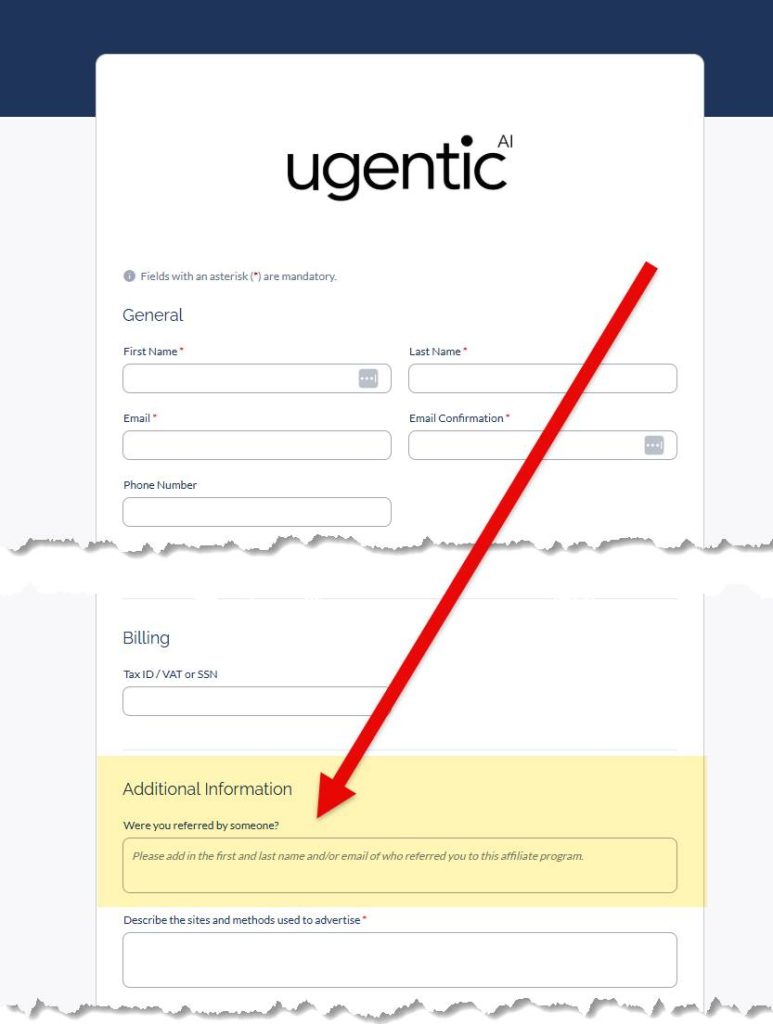
[46:06] “Where do we get the sign-up docs?” Here, look, if you didn't get yours automatically sent to you, then I need you to send me a ticket — getsupport.biz — and I'll get them for you, right? Because every Small Batch System member, every subscriber should have gotten an NDA invitation. And so this is how the onboarding is set up. You sign the NDA, which triggers an agent agreement, okay? So the NDA comes from our third-party contract document service. It's like DocuSign, but I think it's better. Panda Doc sends you an email, it says “Click here to sign your NDA.” You click here, you sign the NDA — this triggers an agent agreement, which shares the terms of how you get paid, when you get paid, what qualifies you to get paid, etc., etc. You sign that the exact same way, click the sign. And within three minutes, let's say, you will get an email that confirms you've signed your agent agreement. You're now onboarding as a FinTitan agent. And there is a link to a form where you set up your agent account, right? This is where you establish your agent referral link. It gives you your agent dashboard credentials, and so that is the final step in the onboarding. At that same time, when you sign the agent agreement, you will also be auto-registered for the Wednesday Insider Agent training calls — 11 a.m. Eastern, every single Wednesday with myself and Brian. And so you will get a separate email from GoToWebinar, just like you do for Small Batch, that says, “Welcome to FinTitan Insider Agents, join us Wednesday at 11 a.m.” So if anybody is missing any of those steps, please send me a ticket at getsupport.biz and we'll figure out what you didn't get and we'll get it for you, okay?
[48:01] Okay, so Chris has a question about Small Batch. “There was an issue between my domain registrar and the hosting site. Tech Support made me delete the domain at the hosting site and reinstall. I did that and everything was fine. I set up the same email address again and everything seems to work. Good. The campaign is going again today, so I assume there's not a new warmup required.” If it's the same email address, Chris, then no, there shouldn't be another warmup needed. The domain, regardless of where it set up the house, was warmed up, right? So the ISPs understand that emails sent from your address are valuable and desired and received well — marks not spam, etc. So that remains the same. You have not lost any time. I'm really glad the support team was able to get you taken care of. I'm sorry that it was kind of glitchy, but I'm glad it worked out.
[48:52] Let's see. Alonzo says, “If we complete a done-for-you lead list request and it comes back with less than 400 businesses, can we do a follow-up in another city for the remaining X amount?” No, absolutely, Alonzo. Okay, so the way the daily list requests work, okay. There is no guaranteed minimum or maximum, okay? If there's 20,000 results — yes, I shouldn't say there's no limited maximum. I think the cap is like 2,500 on a daily list just because we can't corner the market, right? But if you only get 14 or 27 leads, it's not that we have condensed or like capped you. It's because what you asked for — the criteria you gave us — we just gave you everything, right? So in this instance, you got under 400. So whatever your criteria was for that day, yes, exactly right. That day is done, right? So the next day, just submit another request, but change your criteria. If you had said Atlanta, Georgia, say Mableton or Macon, right? Or go to a whole nother state. Um, if you are saying restaurants, you could say full-service rest, but you can change the search criteria by just slightly adjusting the terminology, and that could change your results as well.
[50:23] Let's see. Ramaji says, “There's no entry for bars and nightclubs in the list.” Um, absolutely fine. The very first field listed when you do the dropdown to choose your list type is “Other.” So if you don't see the niche listed that you want, just click Other and that's going to open up a field for you to type in whatever terminology you want to use. This applies also where if you were searching restaurants and you want to search full-service restaurants, you can do that too. So whatever you type into that box is exactly the search terminology that we're going to use.
[50:57] Dale asks, “I should also be able to use Big Data, right?” Yes. Okay, let me just say this. Nobody here is limited to only using the Small Batch tools provided, okay? You are not limited to only using the scripting and the emails that we provide or the lists that are included in your membership. If you have another source — and a partnership that Brian has had for five or six years now — bigdataprofits.com is an incredible resource for business contact data. It is a paid service and the results you get are a lot more targeted and complete than what is provided just by default with your Small Batch System membership. It is an optional third-party service, but you absolutely use the data you obtained through purchasing this service with your Small Batch System. The information on Big Data Profits is available to you under the revenue generators. It's an example of a product or system or service that Brian endorses as a possible way to augment your Small Batch System membership — not a requirement, just something that he endorses as a benefit.
[52:23] So Alonzo says, “Ah, so we have to request a new request the next day, not a follow-up to the same request.” Exactly, Alonzo — so simply request a new list the following day.
[52:33] “Do you mean there is a way to eliminate fast food restaurants from our list? I'm getting bunches of those, and they're useless for this program.” Not really, Chris. You can experiment with changing your search terminology. But I can't say, “Give me restaurants that aren't fast food” — that's not a criteria that I'm able to implement for you.
[52:53] “What's the email address to send the FinTitan agent agreement request to?” Please don't email it. Just open a ticket at getsupport.biz and we will — that is going to generate a ticket for you, and then we'll be able to communicate with you through email, through the ticketing system, and I'll be able to get you a direct link to your NDA or agent agreement wherever there was a fall-off in the process. I'll be able to send it securely to you through a ticket.
[53:33] “Please explain the 90-day probationary period associated with marketing this opportunity, Brent.” Absolutely. The day you sign your agent agreement, there's a 90-day probationary period that begins. And in those 90 days, if you submit a lead that turns into a qualified lead — which simply means that the deal comes out the other end of the CPAs and the CPAs say, “Yes, this business does qualify” — then this takes you out of the probationary period and you get to remain a FinTitan agent. Any agent that spends the first 90 days after they sign the agent agreement and does not produce a qualified lead, it simply terminates the agreement.
[54:17] “Might you walk us through filling out the campaign done-for-you request form properly on Wednesday?” Marty, I will do that next Monday. What we're gonna talk about on Wednesday is going to be strictly FinTitan agent marketing. So I won't be jumping into the Small Batch System done-for-you request forms, but I can do that on Monday and I absolutely will.
[54:57] “Probationary period needs to be — ” Chris, what you're asking for is exactly what it already is. A probationary period needs to be amended to make a qualified lead the criteria. That is the criteria. That is the criteria. You have to submit a deal that is a lead, right, and they have to qualify for the credit. They don't have to close. They don't have to do anything. They don't have to file. The CPAs have to validate that they qualify for the credit. That is a qualified lead, and that is how you get paid. So we're way ahead of you, buddy.
[55:39] “Specifically for the FinTitan — ” Oh, Martin, you've combo-ed two questions. Let me go back and find. “Might you walk us through filling out the campaign done-for-you request form properly on Wednesday, specifically for the FinTitan offer to clarify?” Yes, Marty, it will be generally how to do it, and you will plug in the campaign that you get out of the FinTitan dashboard. But yeah, we will walk through the done-for-you on Wednesday.
Inside Look — FinTitan's Processing Team and Commission Structure
[56:14] Vanessa: All right, did I miss anybody? If there's any questions that you want me to recap, review, recover, let me know. I don't wanna leave anybody hanging. I want you to be able to go forth this week and make a decision if you want to participate with FinTitan. I want to help you get onboarded.
[56:36] “How often do we get leads from FinTitan, Pauline?” You don't get leads from FinTitan. You get leads from the Small Batch System, and you can request them every single day. You then use those leads to market, and you are generating leads. You are driving people from that lead list to your agent referral link, and when they apply or when they enter in their information to book an appointment with a FinTitan expert, that's when they become your lead with FinTitan, and that's when you start earning those commissions.
[57:14] Steve says, “Oh yeah, Steve, I saw that you had left and I was like, you didn't even say goodbye.” So my phone dropped. “Resubmitted requests for email warm-ups sent originally ten days ago and not sure if replies are being received.” Okay, fantastic. I'll make sure they take a look at it. Make sure that your account is getting warmed up. After we do perform the service, we go do housekeeping and we delete the emails and stuff so that you don't have to mess with a junky, funky email account. So we clean up after ourselves after we run the warm-up system. So as long as you've got a confirmation that it was completed, then it was. But if you have any doubts whatsoever, yes, send in — we'll check on it for you, we'll get it done.
[57:55] “Can you disclose how leads are coming in? Are there deals now trying to get qualified?” Yes, Chris, we've got loads. I'm actually — I've been tasked to — you know, Brian said I could talk about this, so I don't know how much I — I might be walking the line. I have been tasked to hire a processing staff. So we always had sales folks and we had account executives, right? So when you generated leads, we had a staff of folks that nurtured your lead into filling out an application, signing the CSA, etc. And the original plan was to have those folks collect all the documentation, do the QC, and get it over to the CPAs to process the deal. But what we found is that the volume was so high that we wanted these sales experts on the floor focusing on talking to your leads. And so my history with Brian actually was — 20 years ago, I was his loan processor. He was a loan officer selling mortgages to folks trying to buy houses. And he and I established pretty quickly that he was super great talking to folks, getting them to sign the paperwork. And I was really skilled at walking them through the details of completing their application, getting me their supporting documents, validating that those supporting documents were true, correct, and accurate, and putting together a tidy little package for the mortgage underwriters. And we have taken that exact same process and applied it to FinTitan.
[59:21] So we're going to have you generating leads, a sales force nurturing those leads into deals, and then the processors are going to take over after the lead signs the CSA — the customer service agreement. The processing team, which I have been tasked to build and instruct, manage, oversee, etc., their specialty is going to be getting everything together and over to the CPA in an efficient and cleanly packaged way so that those qualifications come back out from the CPAs even faster. Because remember, that's when you get paid — is when the CPA says, “Yes, they qualify.” Not when the refund comes back, not when a check is cut to the customer, not when a check is written by the customer to FinTitan — when the CPA says yes, they qualify. So the processing role, the processor role is vital. Because if we can cut down a 10-day churn time — because we want our AEs focused on selling your leads — the processors can focus on efficiently, “Okay, I don't wanna talk to the general manager of a restaurant, let me talk to your accounts payable. Let me talk to your payroll company. Let's get these documents together.” And we talk to the right person, let's get it done fast, let's get it to the CPAs in a way that they can easily get through the documentation. The processing team will already have confirmed, “Is this the right form? Is everything signed?” etc., etc. So all of this is speed to commission — a big enhancement for y'all.
Wrap-Up
[1:01:09] Vanessa: Do you — Amy — not really, but send me a ticket and we can talk about it. We can probably work something out.
[1:01:18] “And if so, can that be done by the DFU team, Gerald?” I have missed the first half of your question somewhere. “With a Pro account, do you need to add your domain to Go High Level?” Yes, Gerald. And yes, this is all part of the white-glove onboarding for a Pro account. So yes, there's a done-for-you request form. And also in the migration process, when you're in the Small Batch System and you click “Go Pro” under the Small Batch CRM, it is a completely white-glove process where we help you set up your new account, we migrate your Small Batch System over, and get everything set up for you. We really want to make upgrading to Pro as seamless as possible, because when you're ready to go Pro, we know you're serious about getting to work, and we want to help you with that.
[1:02:11] Kevin, you've got questions about fees. That is something we'll talk about in the FinTitan call after folks have — we're not going to talk about FinTitan fees and what the customer pays FinTitan, because that is NDA, agent-only stuff, right? So I can't talk about that here — that I know for sure.
[1:02:27] All right, Amy says she's got to run. It is, oh, 1:03. So I've taken a little bit extra of your time. Thanks for hanging out with me. I hope I've answered all of your questions. And I was very excited to share that when Brian said I could pull back the curtain a little bit and make sure everybody had all the information they needed to make the decision if they want to participate as a FinTitan agent. Again, it is exclusively offered to our Small Batch members, so I am able to say, if you need help getting onboarded, I can still help you.
[1:03:01] Right, thank you Steve, Kevin, Sandy, Chris, Amy, Darryl, Kat — thank you so much everybody that has come and spent the afternoon with me. I hope you have a great lunch and a great week, and I hope I see most if not all of you Wednesday at 11 a.m. Eastern. Thank you so much everybody. We'll talk later. Bye-bye.